If you’ve ever felt frustrated by stubborn weight that just won’t budge, you’re not alone. For years, I tried focusing on calories and exercise, but the scale barely moved. What I’m starting to realize now is that understanding blood sugar—and how insulin affects fat storage—can completely change the weight-loss conversation. Learning how these systems work together has helped me finally start seeing why some approaches work and others don’t.
Medical Note: This content is for educational purposes only and reflects my personal experience and research. It is not medical advice. Always consult your healthcare provider before making health decisions based on this information. Read my full Medical Disclaimer here
Understanding Blood Sugar, Insulin, and Body Weight
Blood sugar, also called blood glucose, is the main type of sugar circulating in the bloodstream. It’s the body’s quickest and most accessible source of energy. When I eat foods that contain carbohydrates—things like bread, rice, fruit, or sweets—my body breaks them down into glucose. That glucose enters the bloodstream and is used to fuel cells, muscles, and even the brain.
To manage this process, the body relies on a hormone called insulin, which is made by the pancreas. Each time I eat and glucose enters my bloodstream, the pancreas releases insulin. Insulin acts like a key, unlocking the body’s cells so glucose can move from the bloodstream into the cells to be used for energy.
If there’s more glucose than the body needs right away, it gets stored. Some of it is stored in the muscles and liver as glycogen, which the body can use later for energy. But when those storage areas are full, the extra energy is stored as fat. This is one reason insulin and blood sugar play such an important role in body weight.
Researchers have also found that keeping blood sugar and insulin levels more stable may help regulate appetite and energy levels. When blood sugar rises and falls quickly, it can trigger hunger, cravings, and fatigue. Over time, these swings make weight management more challenging.
How Blood Sugar and Insulin Work Together
Every time blood sugar rises after a meal, insulin steps in to help bring levels back down. Its main job is to move glucose out of the bloodstream and into the body’s cells so it can be used for energy.
However, insulin also plays another role that many people don’t realize. When insulin levels stay elevated frequently—such as when I eat a lot of highly processed carbohydrates or snack throughout the day—the body stays in a mode of storing energy rather than using stored fat for fuel.
Over time, this pattern makes it easier to gain weight and harder to lose it, which is one reason many traditional calorie-focused diets feel frustrating. Understanding how this process works helped me realize that weight loss isn’t always just about eating less—it’s also about how the body responds to different foods.
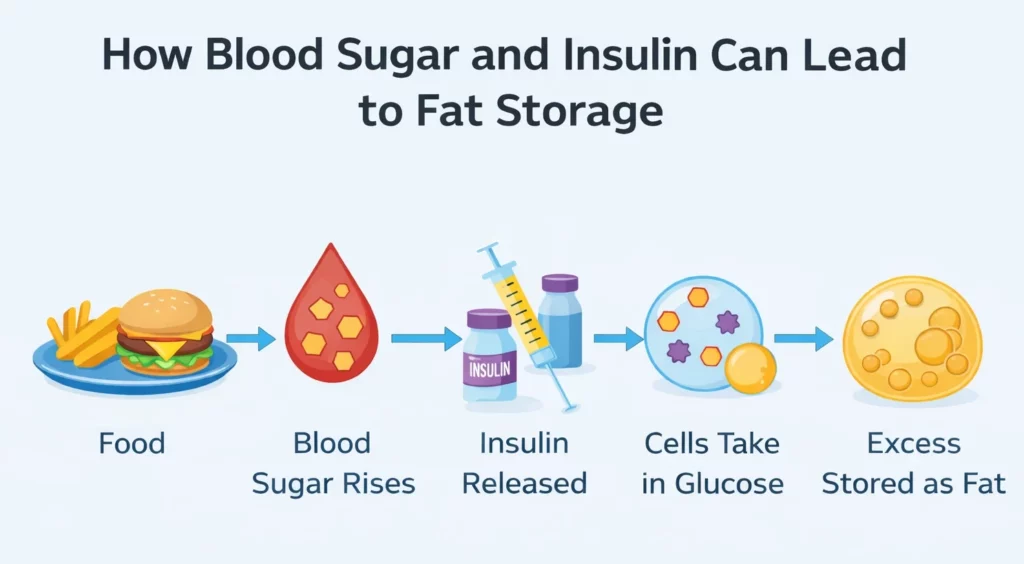
Here’s a simple way to picture what happens after eating:
- I eat a meal, and carbohydrates in my food are broken down into glucose, which enters my bloodstream.
- My blood sugar rises and my pancreas releases insulin.
- Insulin helps my body’s cells absorb glucose to be used for energy.
- If more energy is available than my body needs, some of it is stored for later use.
When this cycle repeats many times throughout my day—especially when I’m eating foods that cause quick blood sugar spikes—I start to notice how much it affects my hunger and energy. My appetite feels harder to control, cravings show up more often, and my energy can rise and fall more than I’d like.
That’s one reason I’ve started paying closer attention to how my body responds to different foods instead of focusing only on calories. Watching those patterns has helped me understand why some meals leave me satisfied for hours while others make me hungry again much sooner.
Why Repeated Blood Sugar Spikes Lead to Weight Gain
One thing that’s been important for me to understand is how certain foods affect my blood sugar differently. Foods that are high in sugar or highly refined carbohydrates can cause my blood sugar to rise quickly. When that happens, my body releases more insulin to help bring those levels back down.
These faster spikes and drops often leave me feeling hungry again sooner than expected. I might also notice dips in energy not long after eating, which can make it harder to stick with healthy eating habits.
When my blood sugar stays elevated for longer periods or spikes frequently throughout the day, my body keeps releasing insulin to bring those levels back down. Because insulin helps store excess energy—often in the form of body fat—this pattern can make it easier to gain weight over time.
Another thing I’ve learned is that some foods I once thought were “healthy” can still create larger blood sugar spikes than I realized. The real difference often comes from how my body responds to those foods and how often those spikes happen throughout the day.
The Role of Insulin Resistance
When blood sugar and insulin levels stay elevated frequently, the body can start becoming less responsive to insulin’s signals. This is commonly referred to as insulin resistance, and it’s something many people hear about when discussing weight gain and metabolic health.
In my case, this topic became more personal when my doctor told me I was in the prediabetic range. That conversation made me start paying much closer attention to how blood sugar and insulin might be affecting my weight and overall health. I’m still learning and making gradual changes, but understanding how these systems work has been an important step for me.
As I began learning more about insulin resistance, I realized it often involves the body needing to produce more insulin to keep blood sugar levels steady.
When this happens, my body releases more insulin to help move glucose out of the bloodstream and into my cells. Over time, higher insulin levels can encourage my body to store more excess energy as fat.
This pattern can gradually create a cycle that becomes frustrating for people trying to lose weight. Even when I’m making healthier food choices, my body may still respond to those insulin signals in ways that make weight loss slower or non existent.
Some people notice patterns that may be connected with insulin resistance, such as:
• feeling hungry again soon after eating
• gaining weight more easily around the midsection
• feeling tired or sluggish after meals
• craving sweet or starchy foods
These experiences can happen for many reasons, but they are part of why more people are starting to look at blood sugar patterns as an important piece of the weight-loss puzzle.
Frequently Asked Questions
Here are some of the top questions people ask about blood sugar, insulin, and weight:
Question: Can weight gain cause high blood sugar, or is it the other way around?
Answer: The relationship can go both ways. Higher blood sugar and insulin levels can make it easier for the body to store excess energy as fat. At the same time, gaining weight—especially around the midsection—can make it harder for the body to use insulin efficiently.
Question: Do I need to avoid all carbohydrates to keep blood sugar stable?
Answer: No. Carbohydrates are an important source of energy. What seems to matter more is the type of carbohydrates and how they’re balanced with protein, fiber, and healthy fats. Whole foods tend to affect blood sugar differently than highly processed foods.
Question: Why do I feel hungry soon after eating certain meals?
Answer: Meals that cause a rapid rise and fall in blood sugar can sometimes leave people feeling hungry again sooner. When blood sugar drops quickly after a spike, it can trigger hunger and cravings.
Question: Why do I feel hungry soon after eating certain meals? Not necessarily. Blood sugar plays a role in everyone’s metabolism. Understanding how it works can help people better understand their energy levels, hunger patterns, and overall health.
Takeaway: Understanding the Blood Sugar and Weight Connection
Learning how blood sugar and insulin work together has helped me better understand why weight loss can sometimes feel so frustrating. It’s not always just about calories or willpower. The way our bodies respond to food—especially how blood sugar rises and how insulin helps manage it—can play an important role in how easily we store or burn energy.
For me, simply understanding this connection has already started changing the way I think about food, hunger, and weight loss. Instead of only focusing on eating less, I’m becoming more curious about how different foods affect my body and how those responses might influence my energy and appetite.
This is something I’m still learning about, and I’ll be sharing more about what I discover along the way.
I’d love to hear from you.
Have you ever noticed certain foods leaving you hungry again much sooner than others? Share your thoughts or experiences in the comments below.
i